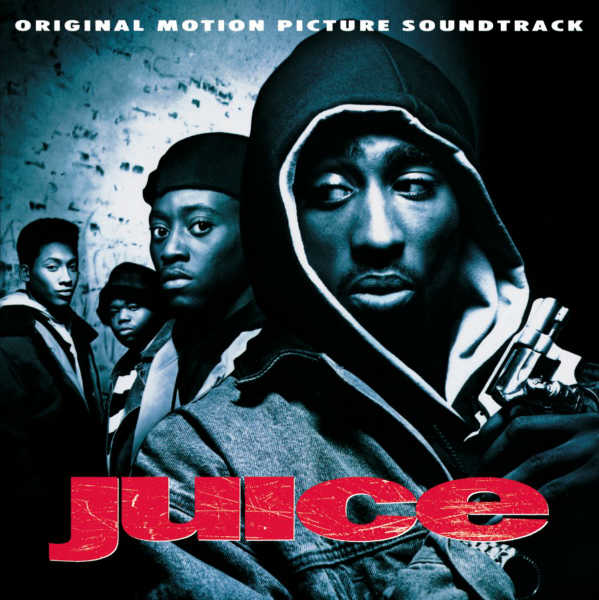
Before my group added Juice to our formal film study movies to watch list, I've always wanted to watch it. And I loved it! Juice was not your typical gangster movie. Even though it was made in the 90s , it gave a new gangster/crime vibe. It showed what is was like to be a young boy in the ghetto struggling for respect in the streets, family life at home, dreams and aspirations, and relationships.
Juice was centered around the friendship of four guys, Q (Omar Epps), Bishop (Tupac Shakur), Rahim (Khalil Kain), and Steele (Jermaine Hopkins). The boys started off having innocent but mischievous fun running around town skipping school. But, with the motivation to get 'juice' in their neighborhood they all decided to stick up a local corner store. The plan went all wrong and tragic events resulted. The plot took a full 180 from jokes and laughter to guns and blood. The performances put on by the characters were so phenomenal that for a moment I thought it was real! The story line was intense yet energetic which kept me on my toes.
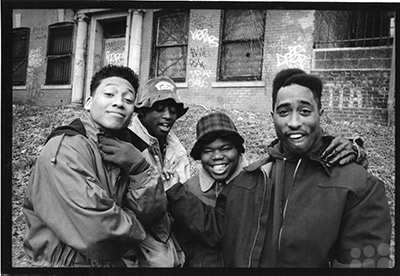 With Ernest Dickerson being cinematographer and director, it was great seeing the different angles of the camera. I was expecting that though due to him working with Spike Lee on movies like Do The Right Thing and She's Gotta Have It. Those films are famous for their strong angles and views and/or opinions of racism and societal problems. Dickerson incorporated the daily lives of the black neighborhood's fashion, life, and language.
I believe one of the key scenes in the whole entire film was when the boys had their dis agreement about respect, death , and friendship in Steele's living room. The scene starts off by Tupac's character Bishop watching from the window his neighborhood enemy, Radamez. The camera is slightly angled and shows Radamez and his gang on the block with their shadows being emphasized on the sidewalk. The camera flips back into the apartment and Bishop and Q start their fight about "juice". The camera does simple dolly shots along with close-ups of the Q, Steele, and Rahim to show their view on the argument. After the fight gets physical, Rahim breaks it up and as he is speaking sense into the boys he has a faint but visible shining white light on him. He stand in the middle of the room speaking about loyalty while Bishop is lurking in the background. I took from this part of the scene the foreshadowing of the rest of the plot. Rahim shows his honesty, leadership, and loyalty to his best friends and he ends up dying first (spoiler!). The white light showed both the importance of his character and an angel-like figure in the movie.

Throughout the rest of the movie, the camera used a lot of long shots to show the Harlem streets and close-ups of the characters to show their emotions during the intense plot. But, Larry Banks , the cinematographer, also tended to be almost very claustrophobic with the camera. Close ups were used a ton! From, the record store scene to Bishop being harassed by Radamez the camera was almost always in the medium to close up shot.
Overall, this film wasn't the typical African American film. It showed all aspects of the culture, difficulties with relationships and life obstacles. But, I personally loved the emphasis on rap culture along with urban fashion. In other gangster/crime movies, having power is the main goal and it is definitely shown to be the main goal of the boys in the movie. The only difference between the two is the respect and power in this movie was called "juice". It's now on my list of favorite movies.