Monday, December 8, 2014

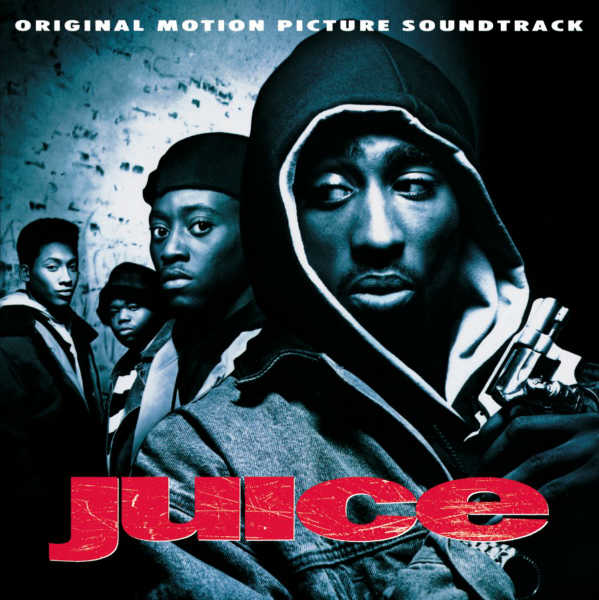
MYST Quarter 2: Juice

Before my group added Juice to our formal film study movies to watch list, I've always wanted to watch it. And I loved it! Juice was not your typical gangster movie. Even though it was made in the 90s , it gave a new gangster/crime vibe. It showed what is was like to be a young boy in the ghetto struggling for respect in the streets, family life at home, dreams and aspirations, and relationships. 
Juice was centered around the friendship of four guys, Q (Omar Epps), Bishop (Tupac Shakur), Rahim (Khalil Kain), and Steele (Jermaine Hopkins). The boys started off having innocent but mischievous fun running around town skipping school. But, with the motivation to get 'juice' in their neighborhood they all decided to stick up a local corner store. The plan went all wrong and tragic events resulted. The plot took a full 180 from jokes and laughter to guns and blood. The performances put on by the characters were so phenomenal that for a moment I thought it was real! The story line was intense yet energetic which kept me on my toes.
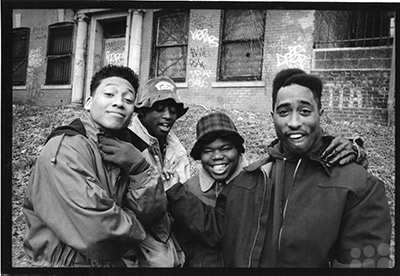
With Ernest Dickerson being cinematographer and director, it was great seeing the different angles of the camera. I was expecting that though due to him working with Spike Lee on movies like Do The Right Thing and She's Gotta Have It. Those films are famous for their strong angles and views and/or opinions of racism and societal problems. Dickerson incorporated the daily lives of the black neighborhood's fashion, life, and language.
I believe one of the key scenes in the whole entire film was when the boys had their dis agreement about respect, death , and friendship in Steele's living room. The scene starts off by Tupac's character Bishop watching from the window his neighborhood enemy, Radamez. The camera is slightly angled and shows Radamez and his gang on the block with their shadows being emphasized on the sidewalk. The camera flips back into the apartment and Bishop and Q start their fight about "juice". The camera does simple dolly shots along with close-ups of the Q, Steele, and Rahim to show their view on the argument. After the fight gets physical, Rahim breaks it up and as he is speaking sense into the boys he has a faint but visible shining white light on him. He stand in the middle of the room speaking about loyalty while Bishop is lurking in the background. I took from this part of the scene the foreshadowing of the rest of the plot. Rahim shows his honesty, leadership, and loyalty to his best friends and he ends up dying first (spoiler!). The white light showed both the importance of his character and an angel-like figure in the movie. 
Throughout the rest of the movie, the camera used a lot of long shots to show the Harlem streets and close-ups of the characters to show their emotions during the intense plot. But, Larry Banks , the cinematographer, also tended to be almost very claustrophobic with the camera. Close ups were used a ton! From, the record store scene to Bishop being harassed by Radamez the camera was almost always  in the medium to close up shot.
Overall, this film wasn't the typical African American film. It showed all aspects of the culture, difficulties with relationships and life obstacles. But, I personally loved the emphasis on rap culture along with urban fashion. In other gangster/crime movies, having power is the main goal and it is definitely shown to be the main goal of the boys in the movie. The only difference between the two is the respect and power in this movie was called "juice". It's now on my list of favorite movies.

Friday, November 28, 2014

Quarter 2 MYST: Beaches


Beaches is my mom's favorite movie which we watched this weekend. I've seen this film probably a thousand times, but since I started Film Studies I started to focus on more of the cinematic features and content. Beaches is one of those films that when you leave the theater, you have cried, laughed, and learned a few things about life. But, this is not surprising due to this film being directed by Garry Marshall who also made both Princess Diaries, Pretty Woman and most recently New Years Eve. 

Originally a novel by Iris Rainer Dart, this film is filled with drama, music, and comedy with CC Bloom (Bette Midler) and Hillary's (Barbara Hershey) friendship being the center. The girls meet and become best friends instantly while in Atlantic City as children because they yearned one thing, a friend. Throughout the film its obvious that the girls were totally different and direct opposites. CC is a struggling but aggressive Jewish singer from the Bronx while Hilary is a shy privileged rich debutante from San Francisco. Beaches shows the high and low points of their relationships through marriages, fighting over the same man, pregnancy, and career changes. Yet, their relationship was what they had left in the end. John Heard and Spalding Gray also appear in the film as love interests for the girls.

This movie came out in 1988, which in this era Steven Spielberg and John Lucas' blockbusters were big. But, also on the rise were the dramas, teen movies, and comedies. For example, Ferris Bueller's Day Off, Mr. Mom, and Steel Magnolias. 

Dante Spinotti who has been the cinematgrapher for movies like The Chronicles of Narnia: The Voyage of the Dawn Treader, Superman Returns, and The Contract. He uses many cinematic elements, from long shots to close -ups. He used them all. But, one specific scene stood out to me out of the entire movie. This scene is When CC Bloom is performing "Oh Industry". The way the stage was set up, she came out in the center with a backlight of red fire. Her back-up dancers wore masks of the industry and when they took them off, the camera was at the same eye -level. The camera then directs itself towards CC on the floor in a scared/fetal position afraid of the "industry". But when she rises up to overcome her fear in the song, the camera goes into a low-angle showing her to be powerful and strong. Also, the spotlight is on her with the red fire in the background and the gray/green lights around the stage. Throughout the film, the big city and bright lights were emphasized for CC while Hilary was filmed and characterized as the more dull or normal lighting and settings. Bright colors and lights compared to neutrals and dim/gray lighting.

Overall, Beaches is definitely a chick flick to enjoy with your girlfriends on the weekends. But, even though it may be in the chick flick category you walk away with a lesson about friendships drama, marriages, family drama, and everyday struggles and disappointments in life. I honestly love this movie, especially with the comic relief of Bette Midler's character CC Bloom. It was a perfect mixture of drama, comedy, and tragedy. 

Wednesday, October 15, 2014

Formal Film Study: Gangster Films made in the 90s


http://variety.com/1995/film/reviews/casino-1200443792/ 
http://www.today.com/id/31573508/ns/today-today_entertainment/t/gangster-films-take-revenge-our-behalf/#.VD4-rvnF-dk
Watching gangster or crime films was a normal thing in my family, but I wasn't actually allowed to
actually watch them until a couple years ago. I was fascinated with the genre and I couldn't stop thinking or talking about the film for weeks. This movie is Donnie Brasco. It has been a while since I've watched the film so I decided to put it in my film study for fun. Along with Donnie Brasco I watched Reservoir Dogs and Casino. These films may be in the same genre yet they are totally different in the cinematography, setting, and mood components.
To start, I watched Reservoir Dogs first just because my uncle hyped it up a lot. Reservoir Dogs in my opinion was very unique in its way of storytelling and the way it looked. It gave me this eerie feeling in a way, hence it is mostly set in an abandoned warehouse and weird color code names. Unlike the other movies, Reservoir Dogs is basically told by flashback scenes of the background of all the criminals and one undercover cop along with flashbacks to after the diamond heist is completed. The heist was never shown in the film further exciting this film with fast editing, cutting and pacing. Considering that this was Quentin Tarantino's first film, the colors are very faded. Blacks and other colors are a bit washed out giving the film almost has a gray look. Tarantino used a lot of stationary camera views of medium shots to show the setting and a few dolly shots throughout the film. Casino was the second movie I watched and it turned out to be the total opposite of Reservoir Dogs in mood and setting. Like Reservoir Dogs, Casino is told in flashbacks by the voices of Sam "Ace" Rothstein (Robert DeNiro) and Nicky Santoro (Joe Pesci) and a few other characters toward the end. Martin Scorsese uses fast, descriptive scenes to introduce the background of characters using their own voices and then starts to get into the story line. There were many crane shots in Casino showing off the glitz and glam of Las Vegas unlike Reservoir Dogs. The last movie Donnie Brasco, has a variety of camera shots to explain whats going on in the film because it doesn't have a narrator. The film shows the unglamorous shots of the mob with Lefty Ruggiero (Al Pacino) and the affects of an undercover cop inside of the mob with Joe Pistone/Donnie Brasco (Johnny Depp). 
Mob movies and gangster films have had a special  part in the film industry since the beginning of cinema.  It seems that Americans love rooting for the bad guy vs the government steming back to cowboys in the early 1900s. In my opinion, it gives viewers suspense, violence, and love, some of they key components of a good film. Directors always makes the viewers side with the gangsters when we know that in the end they will get what they had been asking for, jail or death. Characters are looked at as tragic heroes because they rose from the bottom to become successful and rich but instead die in spite of their hardwork.
In spite of all of these films being made in the 90s, they all have a different look to them proving that there was different technology used for each film. In Reservoir Dogs, there was a key scene where the camera actually does some moving. This particular scene is when Mr.Blonde (Michael Madsen) is torturing a hostage police officer after the heist. During this scene, Mr. Blonde turns on Stealer's Wheel's Stuck in the Middle, an upbeat song that he's singing and dancing to. During his small jig, the camera is constantly panning from behind the victim to following Blonde out to his car. It surprises me that he stays so calm as he's slicing and torturing yet having a fun time to the music. He later cuts off the officer's ear making myself and I know for sure others cringe as the camera pans to an empty side of the warehouse only seeing Madsen's arm. But only a few minutes after, Madsen is unexpectedly shot dead by the passed out, shot Mr.Orange somehow ending the music. This scene was very significant to how well the cinematographer did to allow viewers to see just enough but not too much. In the second film Casino, there were more moving shots for example when Sharon Stone's character,Ginger, was introduced at the casino.
There were crane s
hots of the casino, closeups of the dealers and Ginger, along with the close up of Ace, Ginger's secret admirer. I think that he music in Casino really made it the movie it is today. Every song went along with every scene with Mick Jagger being the main artist. My favorite movie I watched out of all of these had what is known to be Johnny Depp's best scenes. In this scene, Johnny Depp's character Donnie meets Lefty for the first time. There wasn't a lot of cinematic components in this scene that makes it so great. It's the dialogue or script that makes it so memorable. Donnie tells Lefty that his diamond is a "fugazzi" or a fake which sets Lefty off to describe his reputation and later on actually make Lefty take him Donnie under his wing.
All three of these films were in different well known cities all having different culture backgrounds to it yet they all used the f bomb very frequently, as should any mob movie. Reservoir Dogs was set in Los Angeles during the 80s considering the way the criminals and police are dressed. The robbers are dressed in the typical black and white suits with cool shades. Due to the film not giving that much background in the setting, I had to fish for clues to help. Opposed to in Casino, the glitz, glam, casinos, hotels, coolest cars gave the time era away, the 70s or 80s. Robert DeNiro dressed in bright pastel suits and Sharon Stone dressed in furs and expensive suits/dresses. These characters displayed the privileged life that the mob and criminals lived while doing their dirty work. In Donnie Brasco, the infamous Lefty Ruggiero is from Mulberry Street in New York, and like he said, "I'm known all over the five boroughs." Donnie Brasco shows the grimy, dirty journey of men trying to make it to the top of the cake. Throughout all films, I saw that the characters wanted to achieve wealth through crime. No matter the consequence, they worked hard to either keep their position or knock anyone down to get to the top. But while in their missions, the number thing in their lives was loyalty to the ones that they loved. Lefty Ruggiero told his mentee Donnie Brasco that he would rather kill himself than get "wacked" for bringing Donnie in as a rat. Or, another example would be in Casino when Sam's wife Ginger constantly was taking drugs and making wrong decisions, he took her back and provided for her. Lastly, in Reservoir Dogs, Mr. White was responsible for Mr. Orange's gun wound, so all throughout the film Mr. White protected Mr.Orange even when others thought he was a rat. These examples prove that in mob films, family and friends, especially in the mob with them, are the most important things to them.
None of the films I watched were directly engaged with politics except for Casino. Ace Rothstein (Robert DeNiro) would let congressmen, governors, and senators in the casino for free along with hotel rooms and restaurant meals. He gave them complementary service for good business. But this all stopped when Ace fired one of the congressmen's relative. A case for a casino license was against him and this led to the downfall of his dedicated career. I think this film gave viewers the inside to what really happens inside the government. I believe that there are many secrets and bribes that hide behind politicians concerning the mob, mafia, or gangsters. If you think otherwise you can "fugetaboutit"!

Friday, October 3, 2014

'30s Project Blog Post

1.In Murder at Winchester Mansion, our plot was centered around the death of Eben Winchester, a wealthy bachelor in New York City. Before his death, he meets a beautiful Dutch immigrant played by Jean Harlow who soon becomes his mistress. The main suspects of his murder are his butler,William Haines, and his mistress. I think that this film would do really well in 1935 due to the fact that its a drama film which was really popular because it wasn't as boring as the other genres of films. It gave the audience something to connect to in a sense. We decided to go for a more eerie or contemporary style film especially with it being in black and white. I believe our underlying meaning of the film was to present the issues of the high society. Jean Harlow trying to find her way is sort of the same thing as a gold-digger
2.We decided to suspense/thriller/drama to overall attract more money in the box office. Clark Gable and Jean Harlow are known to be in romance/drama films together so we thought it was sort of necessary to have them in the movie.
3.We decided to go with MGM just because they produce those glamorous and glitzy films and that's exactly what we were going for. We wanted a high scale film to bring more money in then going out. Of course, Clark Gable and Jean Harlow both work with MGM so we had them in our film making it to be one of the biggest if it were actually in 1935.
4.We had a pretty well rounded cast including:Jean Harlow, Clark Gable, William Haines, Clarence Brown, and Paul Muni. We basically picked our film based on the past roles that they played in other films. Our leading roles were of course Clark Gable and Jean Harlow who were known to have great chemistry on set. King Vidor was our director and we specifically chose him because he was widely accepted by the audience. He was also known to do court room films which where our film is mainly based. I think that the focus of our film will be both cinematography and editing due to us having to cut some main parts of the film out. We would have to make up for the not as exciting scenes with great camera views and editing of the flashback scenes.
5. The Hays Code affected our film a great amount. We couldn't add any passion scenes between the lovers nor a love triangle between the butler, mistress and bachelor. We also couldn't show any violent scenes which made us switch up the type of death.
6. I feel like our group worked well with each other. We decided on what everyone wanted and not just two people. I wouldn't have done anything differently.

Sunday, September 14, 2014

MYST (Movies in Your Spare Time) Post #2: Perfect Stranger (2007)

   On a weekend with my siblings, we decided to have movie night while our parents were out of town. We chose to watch something ON DEMAND and all voted on Perfect Stranger directed by James Foley. One of the reasons we chose to watch this film because Halle Berry, one of our favorite actors, was starring in it. This movie is considered to some a neo-noir psychological thriller film mainly about Rowena Price (Berry) who is an investigative reporter and is pushed in to investigating the murder of her childhood best friend with the main suspect being executive Harrison Hill (Bruce Willis) of the best ad agency in New York. She has to go undercover under multiple aliases as the secretary at Hills's workplace and an online chatting buddy to Hill with the technological help of her friend Miles (Giovanni Ribisi). This movie definitely had my nerves wrecked while watching it.
   The movie seemed to follow Rowena around the whole movie with dolly shots with exceptions to the camera switching back and forth from flashbacks of her childhood, earlier scenes in the movie and computer screens of the two characters "chatting". The movie was primarily a dark film with the gray cloudy skies of the winter in New York and dim light offices, apartments, and subways. For the most part Halle Berry was shot with a medium and close up shots to show the emotion of the character and long shots to show her closet full of designer clothes. Berry showed a fantastic and convincing job with the moments of rage, confusion, and grief with the help of the cinematographer's shots and angles. The cinematographer also showed many shots of low angles to show the power that Harrison Hill (Bruce Willis) had throughout the movie. I could also say that the film's pace was a bit jerky and fast paced which could add to the bit of confusion some viewers, for instance my sister, had while watching the movie. But, I think the jerky pace of the movie added to the suspense of the movie and had me on my toes.
   I think that one important scene in Perfect Stranger was at the beginning of the movie going into introducing the rising climax. The scene opens with a dolly shot of Rowena (Berry) at a bar and celebrating the success of her big story with her partner in crime Miles (Ribisi). Shortly after, her editor comes and brings a pity party with him to tell her that her story can't be published. Rowena goes from being a drunken celebratory woman to being an angry woman filled with rage as the result of the bad news. This specific scene clearly shows Halle Berry's Academy Award winning skills to convince the audience of her upset. She soon after quits and walks out of bar showing the birds eye view of the street and setting. She then decides to walk to the subway and the murder victim, Grace, is introduced. Grace and Rowena's talk is about Grace's affair with Harrison Hill. In this moment there are many more dolly shots and evidence of the dark lighting. Also, the main conflict, introduction to the other characters/ suspects of murder, and Rowena's terrifying childhood secrets.
   All in all, I actually enjoyed watching this film and I give it a solid 4.5 stars. I am not surprised that I liked this movie because I later found out it was directed by James Foley. James Foley also directed film favorite of mine, Fear (1996) with Mark Wahlberg and Reese Witherspoon another psycho-drama film. The cast list was created well and the film had a great twist at the end. Halle Berry was fantastic as usual and she made me really enjoy the movie. I think this film directs to anyone because it just a typical suspense filled affair themed movie. This movie was a great way to kick off my weekend.

Sunday, September 7, 2014

Review of the Reviews

   Flight starring Denzel Washington was a film that my family members loved and raved about for weeks. This movie was simply about an experienced pilot that has a mechanical failure with his plane but also happens to be drunk and high on the same day while he's flying. Even though he lands the plane and saves all but 6 people, there is a trial and obstacles that he faces throughout the film. We later on find out that he has is an alcoholic and has lost his family and is about to obviously lose his job. For this blog post I read two top critic reviews to get the outlook of others.
http://www.reelviews.net/php_review_template.php?identifier=2545
http://www.nytimes.com/2012/11/02/movies/flight-stars-denzel-washington-as-an-alcoholic-pilot.html?ref=movies&_r=1
   The first article I read was rated at a mediocre 75% by the author, James Berardinelli. James included many points in his article including the director's, Robert Zemeckis', latest films and achievements like Back to the Future, Forest Gump, and The Polar Express. He compared Zemeckis' earlier films to this one because of the simple fact of that Flight is as Berardinelli says," uncompromisingly dark." This film is something different that no one expected from Zemeckis which intrigued some but not many viewers.
   Berardinelli also speaks on the downfall or negative qualities about the film. He states it has: "an underdeveloped subplot about the blame game" and a too obvious ruse to let Denzel Washington back down his alcoholic path the same day of his trial, which felt a bit forced. Everyone who has seen the film could agree, but those things are minor things out of the whole movie. Viewers attention span was also spoken about in the article. Berardinelli thinks that viewers would get bored and wouldn't be able to endure the full movie of Denzel Washington destroying himself. The movie is not entertaining but very well put together.
   The last review I read was in the New York Times written by Manohla Dargis and it gave Flight an outstanding 90 on its website. This review basically praised the whole film from its actors, camerqa shots, and director. Dargis felt like the film was something that everyone could connect to because it was so real and raw. She gives Denzel Washington and Robert Zemeckis a great deal of kudos for Washington's outstanding performance and Zemeckis' great use of racing cameras and his return to live-action cinema.
   After I seen Flight I didn't know what to think about it. I was sort of in the middle and I am actually glad that I am doing this research just to get different point of views. From Berardinelli's article, one thing he says really caught my eye. He states, "The acting is top-notch, the writing is on-target, and the material packs a dramatic punch. It may not be frivolously engaging but it is compelling." I totally agreed with this statement just because while watching the film I felt just a bit bored of Washington's character's same actions and words. He would constantly just abuse and misuse not only himself but everyone around him which was frustrating to watch. But, I also agreed with the New York Times article written by Dargis. She states, "...the accident in “Flight” is freakishly real; it’s one of those big-screen nightmares that will inspire fear-of-flying moviegoers to run home and Google car rental deals and Greyhound schedules. It’s a showstopper, with thrashing inverted bodies amid sickening screams and engine noises." I totally agreed with her opinion because as a person who is fearful of riding planes, this movie convinced me that what I was watching was actually real. Zemeckis' did a outstanding job with camera shots and editing throughout the movie.
If I never saw Flight and looked up reviews about the  movie, I would honestly be more convinced by the New York Times article. The author did a wonderful job with vocabulary selection and keeping the reader enticed about her view of the film. I not only picked this article for the author's entertaining writing skills, but also for its more well known website and newspaper. I simply just felt like it was more of a dependable source.
   Coming to the end of the review, topics that I would reveal on Flight if I wrote a review would certainly contain the great list of actors in this movie like Denzel Washington, Don Cheadle, and John Goodman. Seeing these well-known actors in the film just made the movie more interesting and compelling. I would also contain sporadic bits of humor the director would put in the movie. Zemeckis would use actors like John Goodman for comic relief to lighten the mood just a slight bit which I really enjoyed. All in all, I think that Flight was overall a very dark but interesting movie on a topic that many people could easily relate to.

Monday, August 25, 2014

Film Intro Survey

1. What is the first movie that really made a strong impression on you?
-Beaches, because it was a movie that had a variety of themes and life lessons in it. For instance, lifelong friendship, relationships/love, and comedy.
2. What are 3-4 of your favorite genres?
-Action/Adventure, Gangster/Crime, Comedy, Drama, Mystery/Thriller, Romantic Comedy.
3. What are 3-4 of your least favorite genres?
-Indie/Arthouse, Horror, Western.
4. What are your five favorite films?
-Donnie Brasco, The Wedding Planner, Coming to America, Troy, Beaches, White Chicks, Fear, Four Brothers, 2 Guns, Rush Hour (series), Enough, A Brooklyn Tale, Taken, Princess Diaries, Cooley High, Rocky (series), Life, Independence Day, Captain America, Robocop.
5. List three characteristics of what you consider to be a good movie?
-Interesting, Informative, Pot-boiler
6. What are some of your least favorite movies?
-Flight, Frozen, Perks of Being a WallFlower
7. List three characteristics of what you consider to be a bad movie?
-Typical endings, Corny, Confusing
8. If you have any favorite directors list them.
-N/A
9. If you have any favorite actors/actresses, list them.
-Mark Wahlberg,  Liam Neeson, Halle Berry, Will Smith, Martin Lawrence, Eddie Murphy, Anne Hathaway.
10. List three films that you consider important films for people to see.
-Jaws, Annie, Donnie Brasco, Godzilla, 42
11. What's your oldest favorite film?
-The Godfather
12. What's the best movie you've seen that's been released in the past 2 years?
-Robocop, 42
13.What are the next five films on your "queue"?
-No Good Deed, Goodfellas, Fruitvale Station